Polished Concrete Flooring in South Florida
Turning the slab a building already has into its finished floor — ground, densified and burnished, so there is no coating sitting on top waiting to lift under a pallet jack.
Grinding and surface preparation
Successive diamond passes that take off old adhesive, coatings and curing compound and open the slab up, which is what decides how the finished floor looks.
Densifying and hardening
A densifier driven into the open slab so the surface resists abrasion and dusting instead of powdering under traffic.
Polishing and burnishing
Progressive finer passes to the level of sheen the space calls for — a warehouse and a showroom do not want the same floor.
Joint and crack treatment
Saw cuts, control joints and cracks filled and shaved flush so wheels cross them without hammering the edges apart.
Repairs before finish
Spalls, patches and old equipment pads made good first. A polish does not hide a bad slab — it shows every bit of it.
Working around the building
Columns, racking, dock doors and live areas sequenced so the space comes back in usable sections rather than all at once.
Recent roof coating work
Photographs of our own crews on our own jobs. Three commercial roofs, each one shown twice.
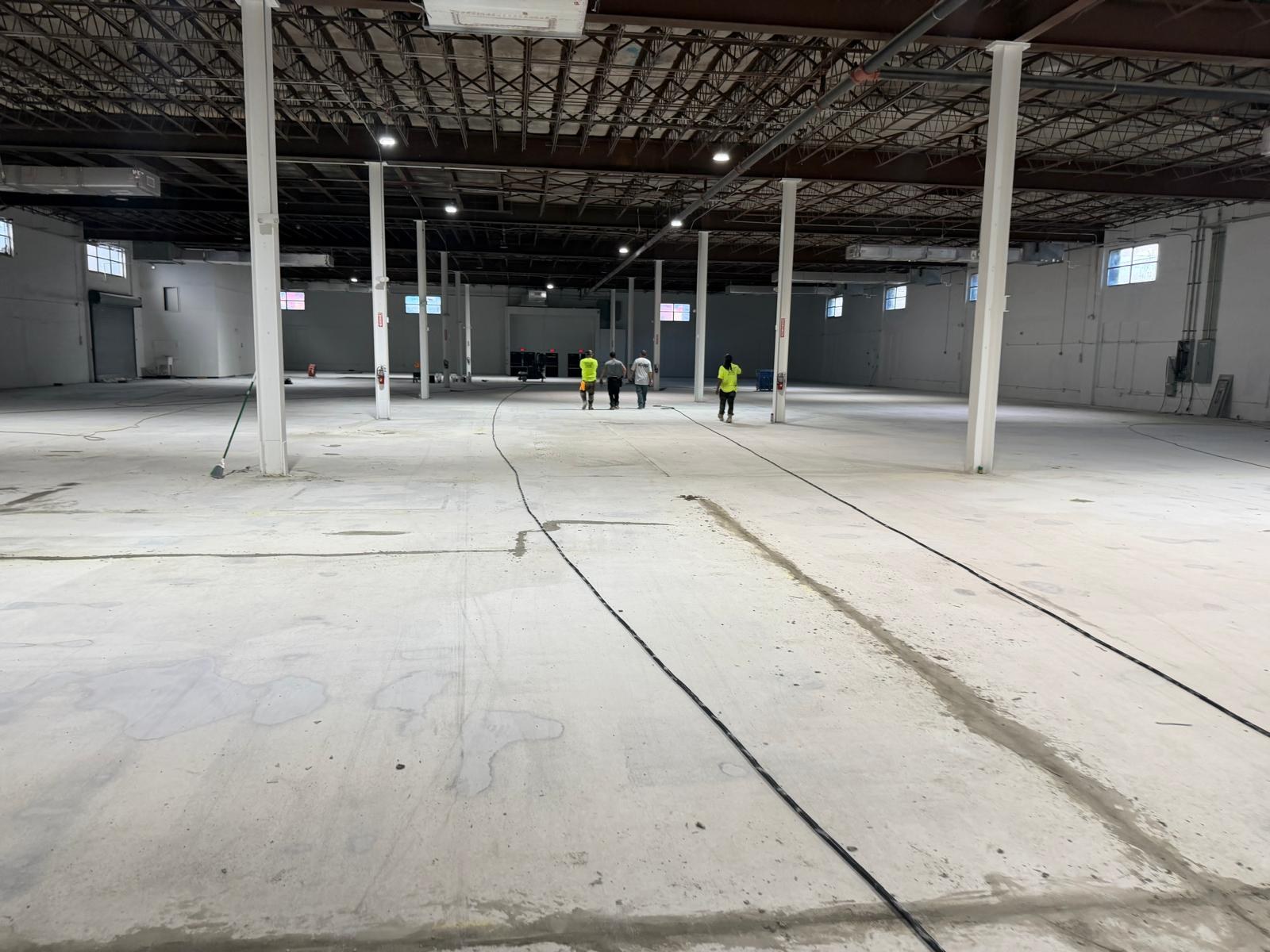 During
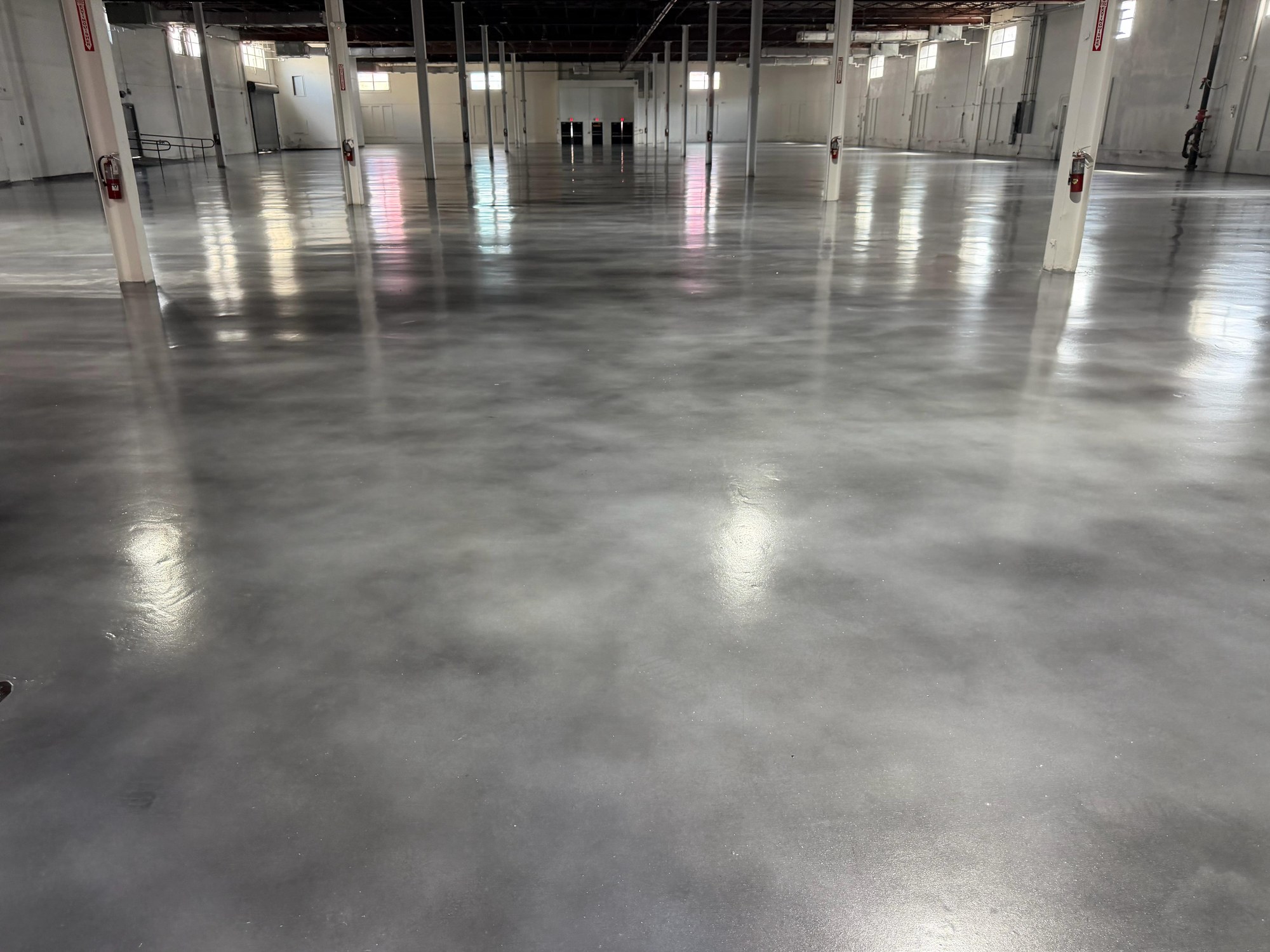 Finished
The same warehouse floor part-way through and completed — ground back, densified and burnished between the standing columns.
On the job
Filmed by our own crew on site.
Walking the finished floor — the reflection is the polished slab itself, not a coating.
Grinding the existing slab back, the pass that decides how the finished floor looks.
Wet pass over the floor before the final burnish.
Standards we work to
The qualifications an association's engineer asks for, in writing.
Common questions
Who this is for
Warehouse and distribution space, retail and showroom floors, commercial and industrial property across South Florida.
Get an estimate
Estimates come from Vincent Norman, who has spent over forty years in the construction field.
📞 (754) 209-3054